Day 52 – Sutton Bridge to Fosdyke Bridge 22nd August 2014

Today was a very easy, pleasant day. Following my bovine escapade last time, I drafted in Rachel for protection, but there was no real need. We met a few “coos” as she calls them in her lovely Scots accent, but they were supine in the sun.IMG_7873

We took a bus from King’s Lynn to Sutton Bridge, where I finished, bad temperedly, back in July. The sun was shining but there was also plenty of cloud cover.IMG_7856

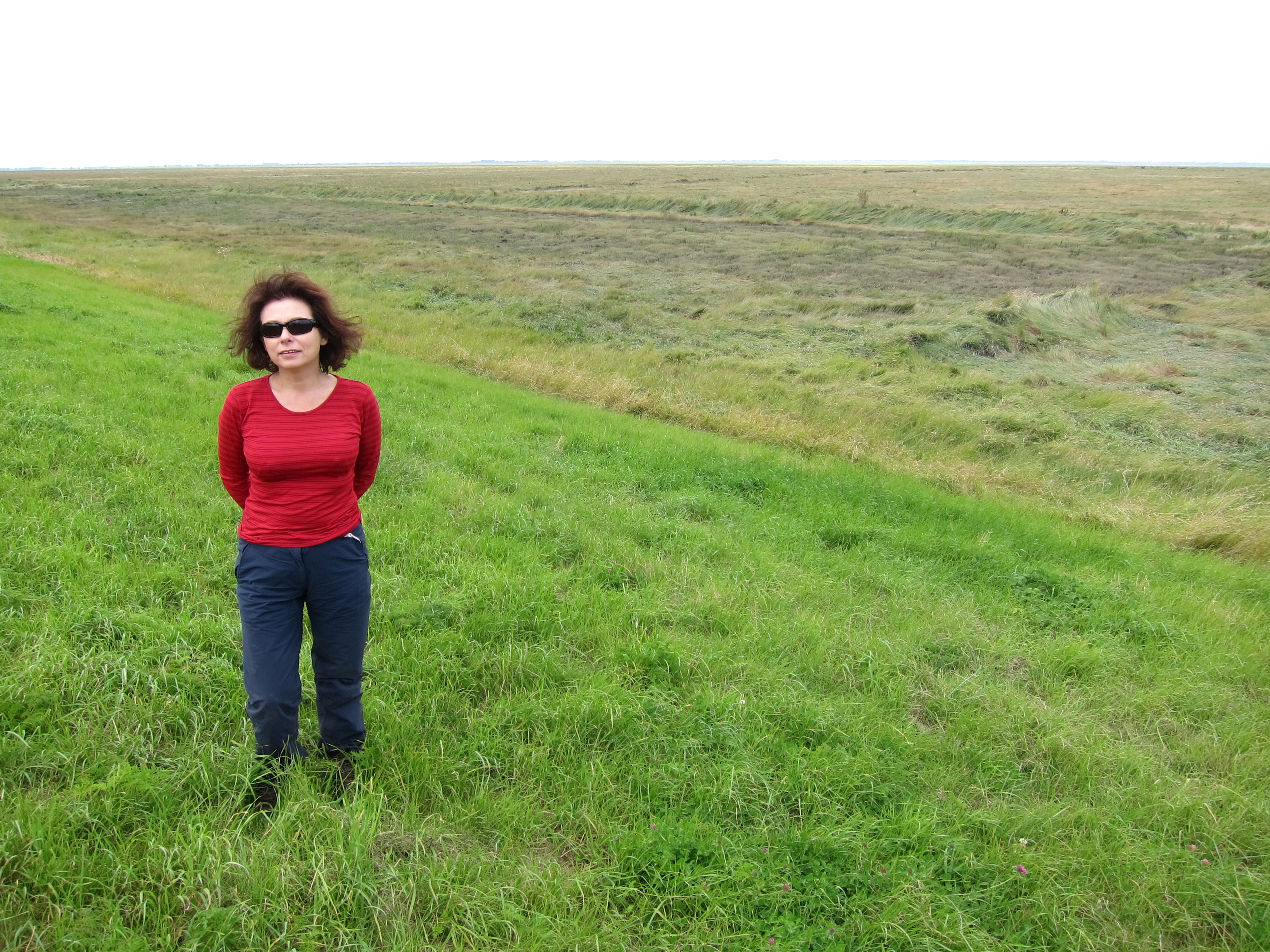
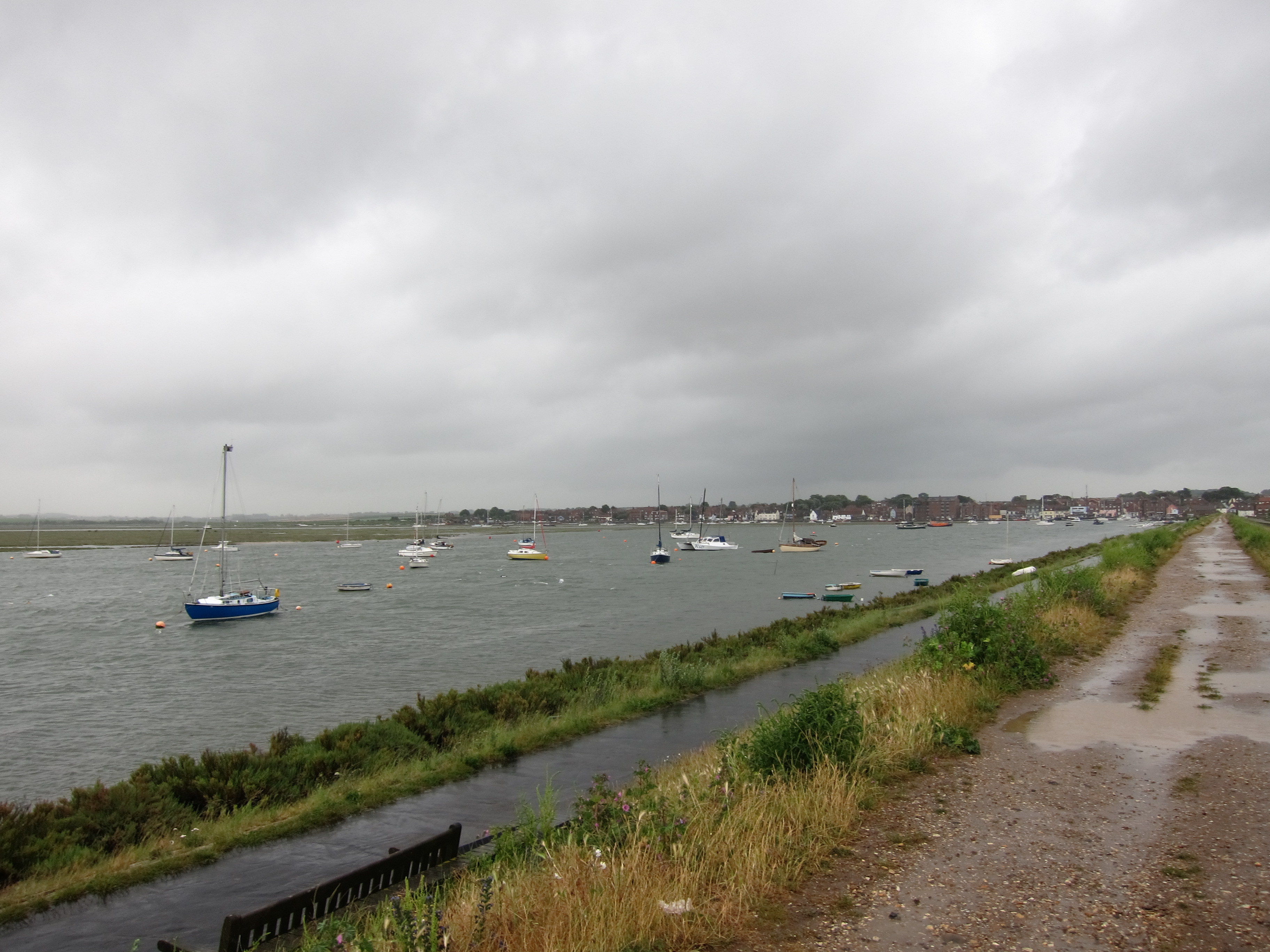
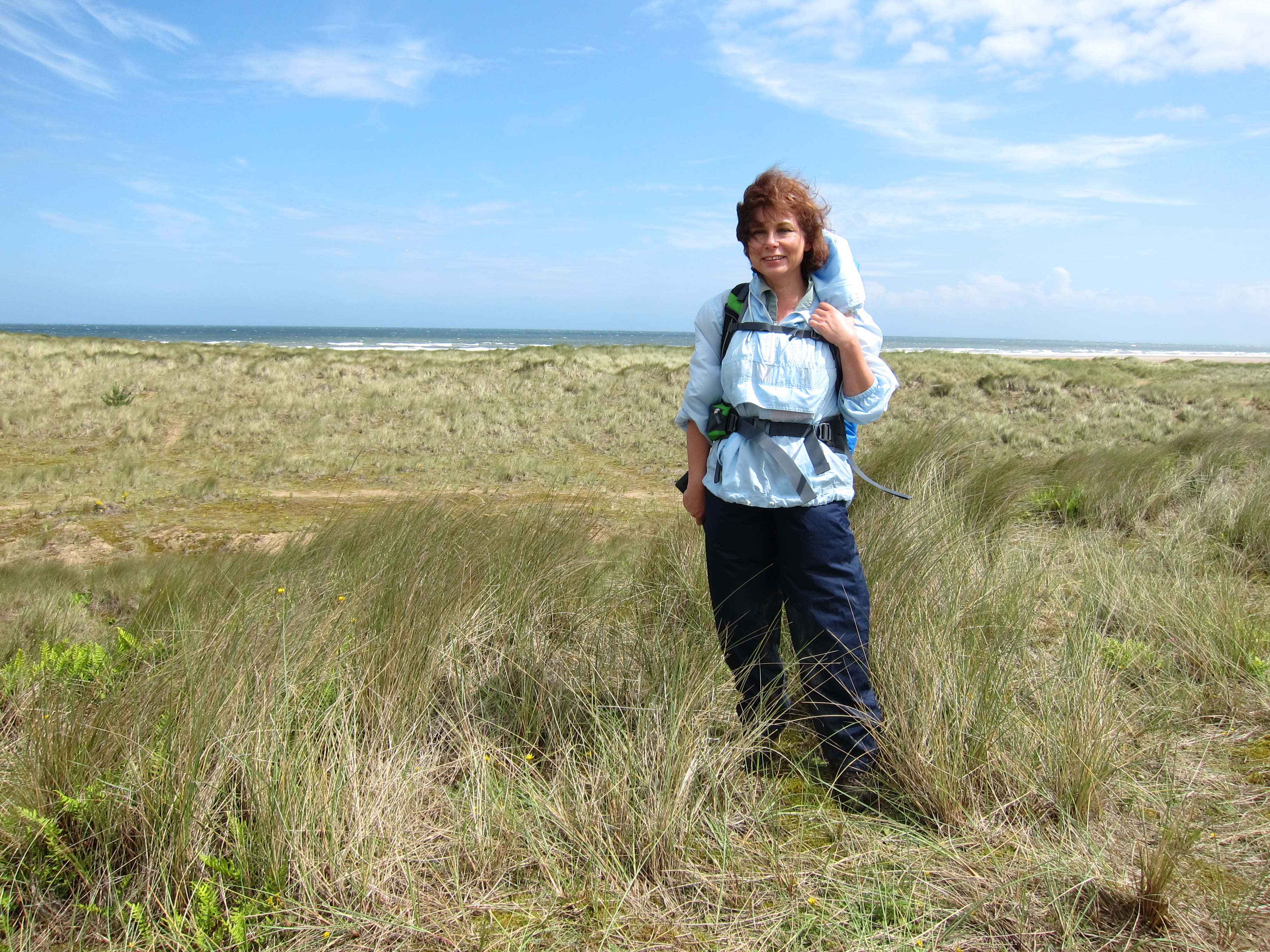
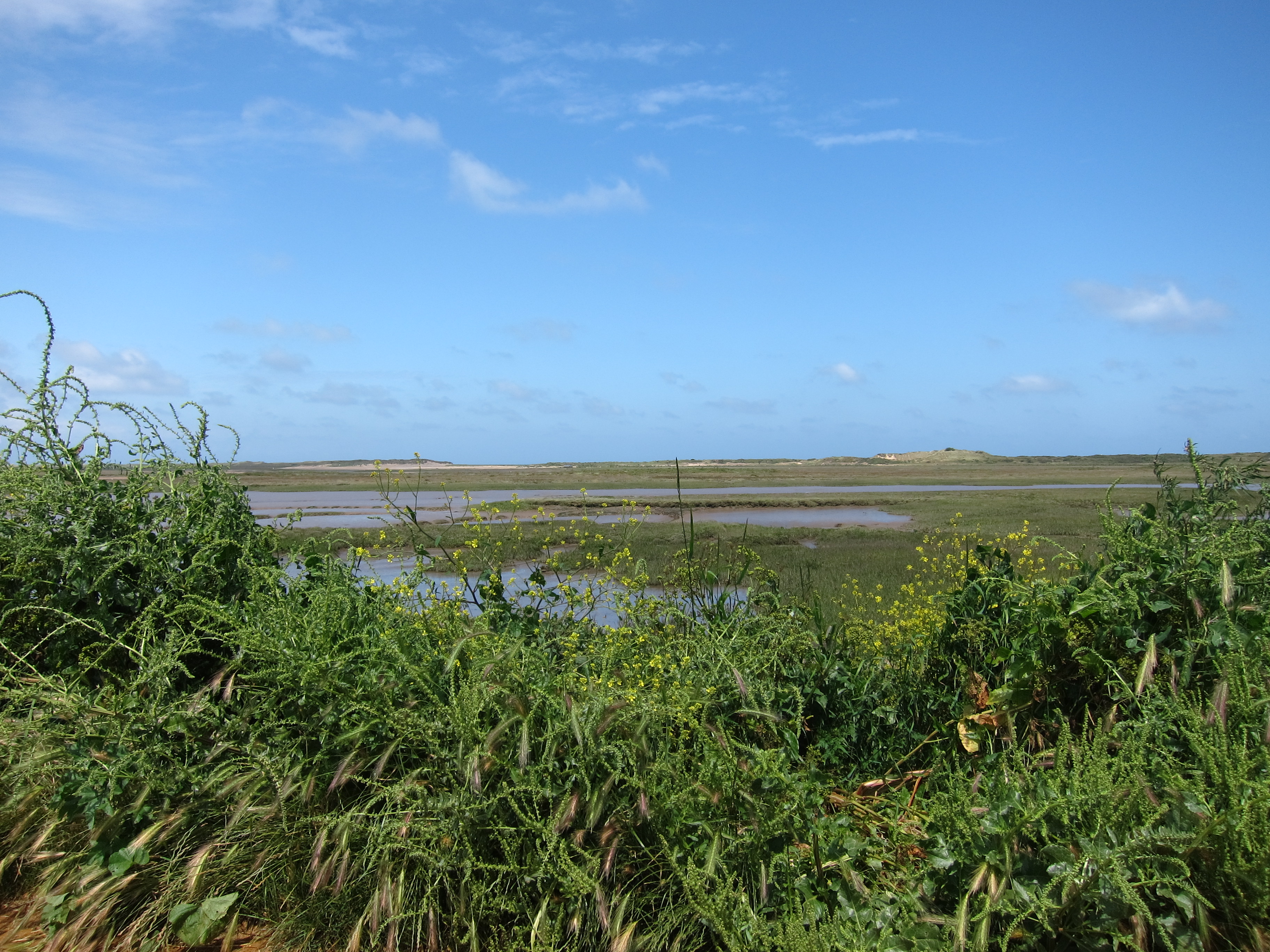
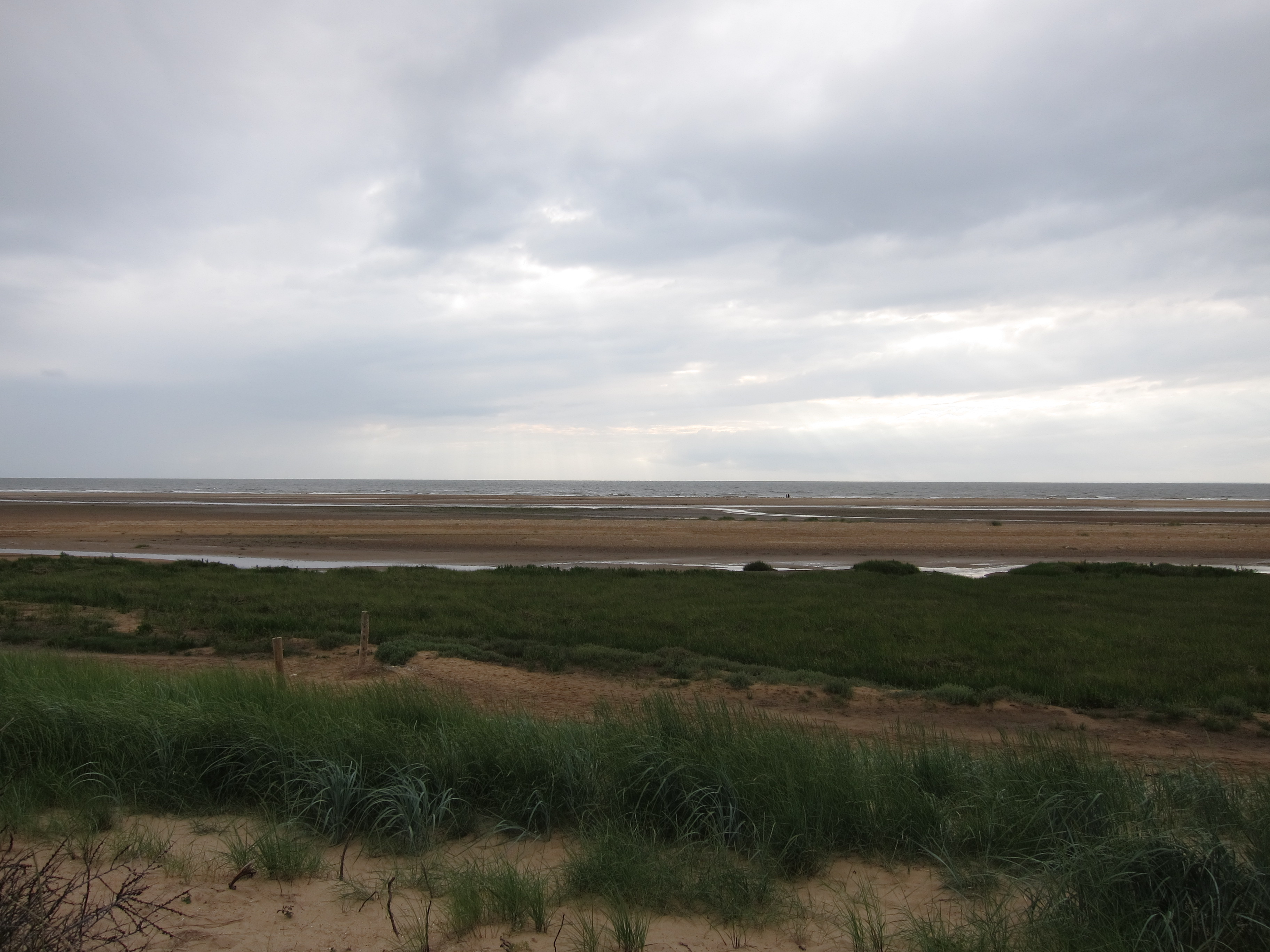
After stopping to talk to a beautiful smokey grey cat, we walked back to the Nene and followed the road running to the east of the water. Eventually, the road became a track, and the track, a path. This is the Nene Valley Way. Towards the end of the Nene channel were a delightful pair of lighthouses. The one on the farther bank had clearly been done up into a very pleasing residence, and we both had a pang of house envy.IMG_7862 But on the whole, I wouldn’t really want to be on such flat terrain. As we turned west along the Wash, we could see, far out to our right the line of the sea, but, to be honest, the marsh is so wide here; it is hard to believe I am actually on a coast walk.IMG_7868

The harvest is now mostly in – we saw a few combines diligently moving up and down the fields, but mainly the view inland was of cut corn fields or hay meadows with bales stacked high. The corn was interspersed with the odd field of potatoes or beans, and there was one big expanse where ploughing for, I suppose, winter wheat was beginning.

We saw few people all day – occasional dog walkers, one with a very nice retired greyhound that we were tempted to take with us. About half way round we came to an army shooting range. There were minatory signs around stressing the illegality of tampering with the unexplored bombs that apparently littered the area, I am convinced it is just cordoned off while the army searches for King John’s Crown Jewels, of which I have still seen no sign.IMG_7869

The sky, wide and open with 180degree views changed colour constantly with white clouds turning almost black and an interesting pink light over the Wash.

After some 15 miles we could see a tall tower in the distance. I decided it must be the Boston Stump, of which I have heard so much, and so it later proved.

Another 2.5 miles, took us to Fosdyke Birdge, a small settlement on the Welland Cchannel with a few boats moored, and, more importantly, an excellent pub! (See review.)

We took a taxi for the 8 miles into Boston and have booked him to fetch us in the morning to go back to Fosdyke. It seems there are no buses along the A47 going into Boston, the nearest being some 3 miles up the main road, which is a-thunder with lorries.

Boston looks nice, the Stump is indeed imposing. We may have a bit of time inthe morning to have a closer look, as tomorrow is an easy day. Hopefully, tonight will be more peaceful than last night – around midnight our peace was rudely broken by a young woman screaming and screaming at her boyfriend to f**** off and let her have five minutes by herself. She yelled and yelled as he tried to placate her. In the end, earplugs had to be employed!

Day 51 – King’s Lynn to Sutton Bridge 1st July 2014

Sitting in the Pizza Express in King’s Lynn, trying to recover from a severe sense of humour failure. The day started well enough, and should have been very straightforward – 12.5 miles along a clearly marked public footpath along the edge of the Wash. Unfortunately, things didn’t turn out like that. I left my pub at 8am, in search of breakfast and found a greasy spoon – although I am now longing for some fruit, rather than eggs and bacon for breakfast.IMG_7253

I then made a detour to look inside the Minster, and very impressive it is. Some beautiful stonework as well as brasses from 14th century.

The day began overcast but looked as though it would clear up, which it did. I walked back down to the river bank and debated whether to turn south for the road bridge – a good mile each way to the bridge and back or to head for the ferry. Not having looked up the running times, I wasn’t sure if it would have started.

I opted for the ferry and was pleased to find it was already operating, although I missed one by a few minutes. However the ferryman is pretty brisk, and although the vehicle itself looks pretty clapped out, it does the job swiftly enough.IMG_7281

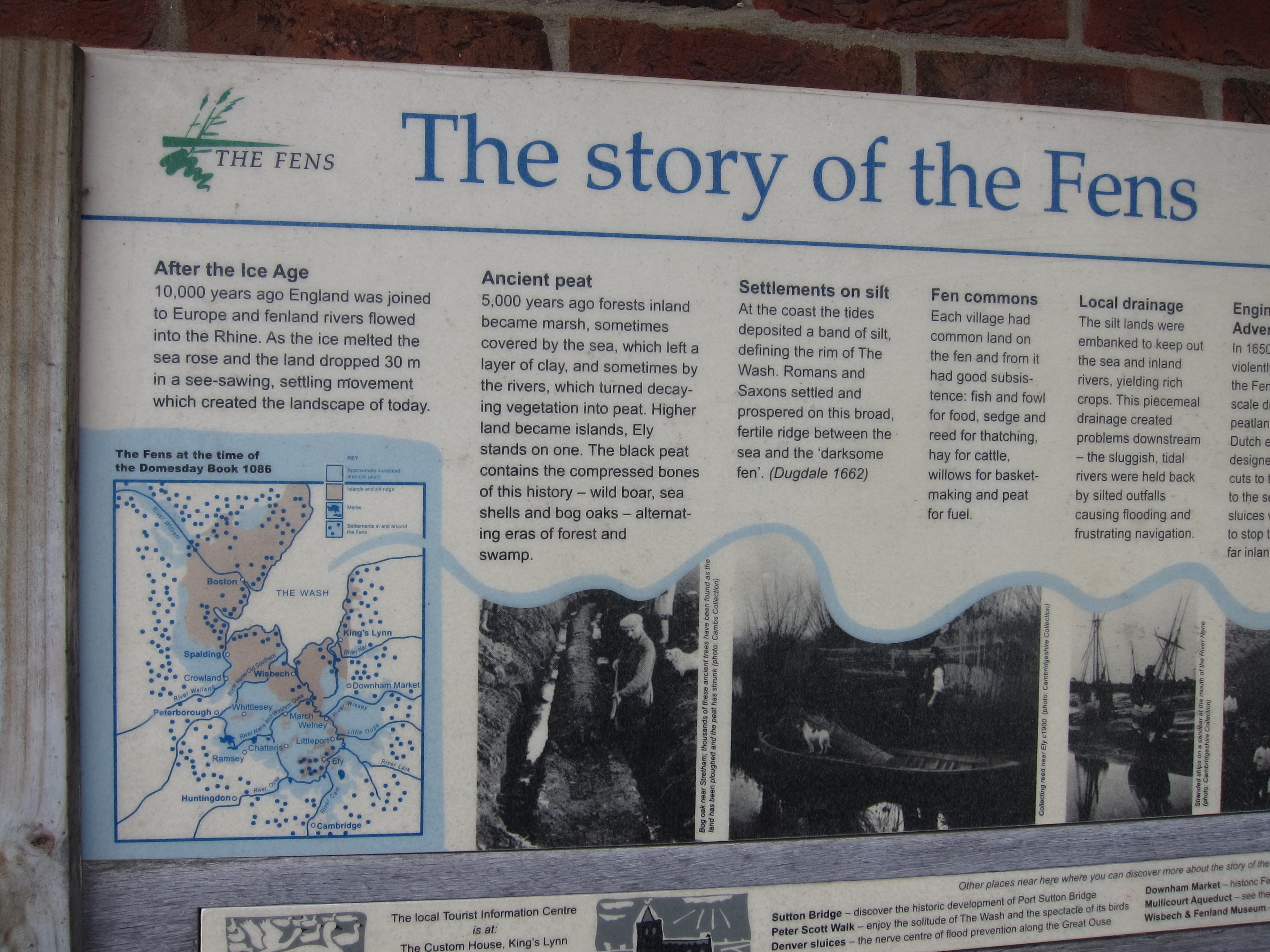
I landed at West Lynn in a few minutes, and had a look at the little exhibition about the draining of the fens before starting out on the Peter Scott Way. IMG_7282I had never heard of this path before which runs from the ferry at West Lynn to Sutton Bridge, along the edge of the Wash.   The sun was shining by now, with very little wind, and I was already glad of my hat. I sauntered on, making good time, and at around eleven decided to stop for 10 minutes to eat some chocolate and admire the view.

That 10 minutes cost me hours! I sat looking across the Wash back towards Snettisham where I had been yesterday, before my Sandringham jaunt. I contemplated the day ahead – easy walking, an unmistakeable route and no farm animals. I couldn’t have been more wrong!IMG_7296

Ten minutes later I approached a building that I had been able to see for some mile or so. I had thought it was an electricity substation, but as I got closer I saw it was a barn. I had no sooner registered this fact than a herd, or I might say a horde, of at least forty head of cattle poured out of the barn and stampeded up the bank. They were young male beef cattle, and presumably normally run down the other side of the bank to pasture on the grassy marsh edge.

To my utter dismay, they caught sight of me, not 50 yards away and the leaders stopped dead on the bank. Most of the rest followed them and I was faced with a herd of cattle and no way round. Now, I am not wild about passing cattle at the best of times but generally, if they are grazing quietly, I can slip through without drawing attention to myself.  There was no hope of that – they were curious, very curious, and whilst aggressive might be strong, they certainly weren’t friendly.

I yelled out in the hope that the farmer was there and had just let them out – he could have chased them off for me.   But there was no-one there. Presumably they just go in and out of the barn at their leisure.

I contemplated my options. There was no way I could go through them. I could go to the right down the bank and into the marsh but I didn’t know how tricky that would be. Besides, I would have had to cross their normal path. I considered going left between them and their barn. That didn’t seem too appealing either as there were still some left in the barn and I didn’t want them rushing out.   The third option was to go behind the barn and wait until they had lost interest. I slithered down the bank to the left and hopped over the five barred gate. It is amazing how swiftly I can move in these situations. I thought that if I hid for a bit, they would move off the bank, but no. Not a bit of it. I waited for a good fifteen minutes, but every time I emerged into view they would start to bellow.

Behind the barn was a large wheat field. I thought of walking along the edge of it, at the foot of the ridge, but the cows were still way too close for comfort.   I looked at the map and decided I should walk the half mile down the farm track, at right angles to the ridge, then run parallel with it and either cut back to it, or follow a ridge further inland that had been the 1910 water front.   So, off I went. Every time I looked back, the cows were still clustered on the ridge.

I got to the beginning of the next field – wide, open, East Anglian fields at least quarter of mile in length and width. I could see that there was a gate across the ridge footpath, so I thought I would cut back up, and climb back onto the path with the gate between me and the cattle.  First mistake.IMG_7305

The crops are pretty high now, and reached above my head. I kept close to the field which was not sown, but it was very tall grass, and cleevers everywhere, entangling themselves in my boots. I startled a few pheasants, but pushed on. I could see, as I approached the ridge that there was a wire fence, but I was pretty sure I could make short work of that. Imagine my horror when I found, not just a fence but a very wide drainage ditch, running parallel to the path which I couldn’t possibly cross. I looked at the map – sure enough, it was marked, but I had not checked carefully enough. Cursing, I decided to walk along the top of the field, which looked a bit less overgrown and down the other side to reach the 1910 ridge, rather than fight my way back down the way I had come. Second mistake – the field became even more overgrown. It must have taken the best part of an hour to get round the field and then, when I finally got to the 1910 ridge, that was so overgrown I couldn’t possibly walk on it.

The net result was that I had to walk all the way to Sutton Bridge on the road, with no sight of the sea. My socks and boots were full of burrs and cleevers and every step was prickly. Eventually, I bethought me of yesterday’s socks, dug into my rucksack and put those on – not that pleasant, but better than burrs.  The road was at least four extra miles as well.

My only piece of luck all day was coming into Sutton Bridge, and reaching the bus stop just as the bus was trundling up the road.

Day 50 – Hunstanton to King’s Lynn – 30th June 2014

I am very lucky to be sitting in a delightful, if somewhat expensive, bistro in King’s Lynn, overlooking the Great Ouse, rather than clapped up in the Tower of London.

I spent several hours today trespassing through the Sandringham estate. I didn’t set out to trIMG_7175espass of course, but I am not sure how I could have avoided it.

I left my B & B at Hunstanton, this time after a decent sized breakfast, around 8.45. The morning couldn’t have been lovelier. The sky was a clear blue and there was no wind at all. I walked down to the front and admired the Wash. Sunny Hunny was certainly living up to its name. High tide had just passed and the water was still lapping up to the sea wall. Yesterday’s wind meant the sea was still fairly choppy. Far to the north I could still see the enormous wind farm that was very noticeable from Holme- next-the-sea.

The promenade continues for several miles and although it is hard underfoot, makes for fairly brisk progress.IMG_7178 Eventually, the prom comes to an end and the nearest public foot path runs inland along the top of a bank, with a field to the seaward side and marsh inland. I continued along this for some time, kicking myself for having forgotten to bring my hat. I am very prone to sunstroke and the sun was blazing down relentlessly. I slapped Factor 50 all over myself but feared a bout of headache and nausea.
In due course I arrived at the delightfully named Snettisham Scalp: a little outpost on the coast, of the village of Snettisham. Even more pleasing was a cafe and beach shop where I was able to buy a straw hat for the princely sum of £1.99. I sat and had a coffee and relaxed for half an hour before heading onto the shore again. It is relatively easy to walk along the beach here, some shingle, but also hard packed sand. The tide had gone out a long way by this point and I lived in hope of finding King John’s Crown Jewels, lost in the Wash in 1216.  Sadly, no sign of them, but I will keep my eyes peeled tomorrow.IMG_7196

There are huge numbers of seabirds of all sorts, and also, sadly, lots of jellyfish exposed to the beating sun. Signs warned walkers about walking too close to plover nests. I did not see any although I am sure I wouldn’t recognise them anyway. But I did see a lot of oystercatchers. The whole area seems to be managed by the RSPB. On the inland side is a lagoon, with a steep bank between the lagoon and the beach along which is the foot path.

The map showed that at the south end of the lagoon, all of the tracks converge to cross a canal where there is a sewerage outflow but the lie of the land and the direction of tracks has changed since my map was published, mainly, I suppose, because of last December’s storm surge. In consequence I found myself on the wrong side of a barbed wire fence and gate, and had to exercise some ingenuity to get back onto the right track.. After some wriggling around, I reached a gate near the crossing point.

My map showed a series of paths apparently running along the tops of banks between marsh and fields, so I turned south along a bank near the sewage works. A track was running to the side, but I stayed high. I turned back towards the sea, but after about half a mile I came to a gate. I went through but the track was so over grown, I couldn’t continue. I decided to return to the point where the track split and take the track. Turning round, I saw a sign on the gate saying “Sandringham Estate, no public access.” However, I had no choice. I couldn’t continue as the path was so overgrown, and it would have been foolish to walk into the marsh.  I did refrain from taking photos on the Estate.

I had not fancied the track earlier, because of the sound of gunshot, but it was that or all the way back to Snettisham and round by the road. I didn’t think it was shooting season, being only the 30th June, but I not really up in these things. There was a van parked, with some dead duck under it, but no sign of life. As I walked along the track, I heard more gunfire but I didn’t see anyone.

I walked on and on, following the tracks, never seeing the sea, but sure it was there some half mile west of me. The Sandringham estate is clearly run for wildlife and shooting. There were many, many butterflies and other insects, and frequent sightings of pheasant and grouse.

A couple of hours brought me to a point where I could turn inland to follow a road and various other paths into King’s Lynn, which would have totalled at least four miles extra, or continue through the estate. Emboldened by the fact that I hadn’t seen a soul, I decided to press on, turning down a metalled road which did say ”Crown Estate: Private Road”, but not very noticeably, and anyway, there are lots of private roads that can be walked down, I argued to myself.  I checked the map and saw that the track led, eventually, to a little hamlet called South Outmarsh, where I could pick up the track next to the Great Ouse into kings Lynn. I decided to risk it. As I walked along a large farm vehicle went past – I held my breath lest the driver stop and challenge me, but he sailed on by. I carried on, then tuned left, in the same direction as the vehicle. Unfortunately, he hadn’t gone far but was in a yard, cleaning the vehicle. I effected an air of nonchalance as I walked through the yard.

“Excuse me, can I help you?,” a young man in mirrored shades, combat trousers and a tattoo overcoat asked me.

I feigned ignorance. “No, I am fine thank you.”

“It’s just that you are on private land.”

“Oh?”  I didn’t actually lie or say I didn’t know, merely fumbled with my map and said that I was trying to get to South Oumarsh.

“As soon as you took the road up here you were on private land.”

“Oh dear.” I tried to look confused and as much like a harmless middle-aged lady as I could, unfurling my map and saying, “There seems to be a track here.”

I smiled and took my sun glasses off. He recoiled, horrified by the windswept , red eyed apparition in front of him. His immediate thought was how to get rid of me as soon as possible.

“Look,” he took my map, “I am not sure where we are. I’ve lost my bearings.”

I pointed to the shed where we were standing, and to the village.

“Right,”   he said, “you go up there, and climb up to the rise, where there is a sluice. Cross the sluice and you will be alright. I am not giving you permission , mind, you are on private land.”

I smiled again. “Thank you SO much. I’ll be as quick as I can.” I scurried off, wondering what I would have done if I had been forced to go back. I expect I could IMG_7222have cried. However, that was unnecessary as he was very kind and polite and II was very glad not to have to make a detour of several miles.
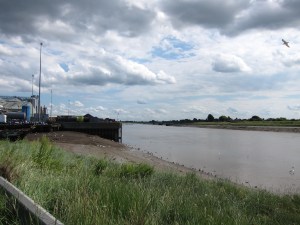
Once over the sluice I stopped to have a celebratory piece of chocolate. Unfortunately, it had melted in the most disgusting fashion all over the inside of the rucksack. In the way of chocolate it promptly ran amok all over my face, hands and trousers. I must have looked a terrible sight.

I eventually reached the track beside the Ouse, visualising bars and boats and already savouring a crisp white wine. I was sadly disappointed. The stench of the dead and rotting fish was so appalling I almost gagged. No self- respecting wine bar would go anywhere near it.

The walk into King’s Lynn was a trudge, and I was very disappointed, initially, with the town which looked dirty and grim. I arrived at my pub at around 4.45 – the oldest continuously inhabited pub in King’s Lynn.

When I reached the heart of the town, I could see it was absolutely delightful – the huge Minster dedicated to St Margaret of Antioch, Mary Magdalene and All the Virgin Saints dominates the square flanked by Georgian facades with the mediaeval houses of the Hanseatic League behind. It is absolutely gorgeous – a real gem of a traditional English provincial town.IMG_7231IMG_7230 Down by the staithe, I finally found the bistro and bar with the glass of white wine I had been fantasising about. See review.

A modest 28 km today – 17.5 miles. I am glad to say the painful knee has resolved into a lightly pulled muscle rather than any joint problem. It is a nuisance and mildly painful, but can be walked through in about fifteen minutes and is not beyond the reach of paracetamol.
Day 49 – Wells-next-the-sea to Hunstanton

Another lovely day, although it did not start out very promising. After a rather low grade breakfast, Bridget and I stepped out into heavy rain to meet Chris and Rita at 9.30 back down on the front at Wells. Foolishly, I did not have my waterproof trousers on, and by the time I had gone 300 yards, my lower half was soaked. I found a covered area and struggled into them, just as the rain turned torrential. Bridget and I hovered under shelter for a few minutes, then, as it eased off, went on to meet the others. The weather was so appalling that I told them all I was quite happy to go on alone, and that I wouldn’t feel at all abandoned should they decide to do something more appealing than walk for 20 miles in a downpour, although I was sure that the sun would come out shortly.IMG_7096

Bridget and Rita elected to meet us later, but Chris valiantly stuck to Plan A. I promised it would be dry by 10am and sunny by 11am. He looked doubtful, but pretended to believe me. We walked along the old railway route directly north out of Wells for the best part of a mile. There is a little cafe at the end, and, since the rain had stopped, just as I promised, we went in to dry off and have an excellent coffee.

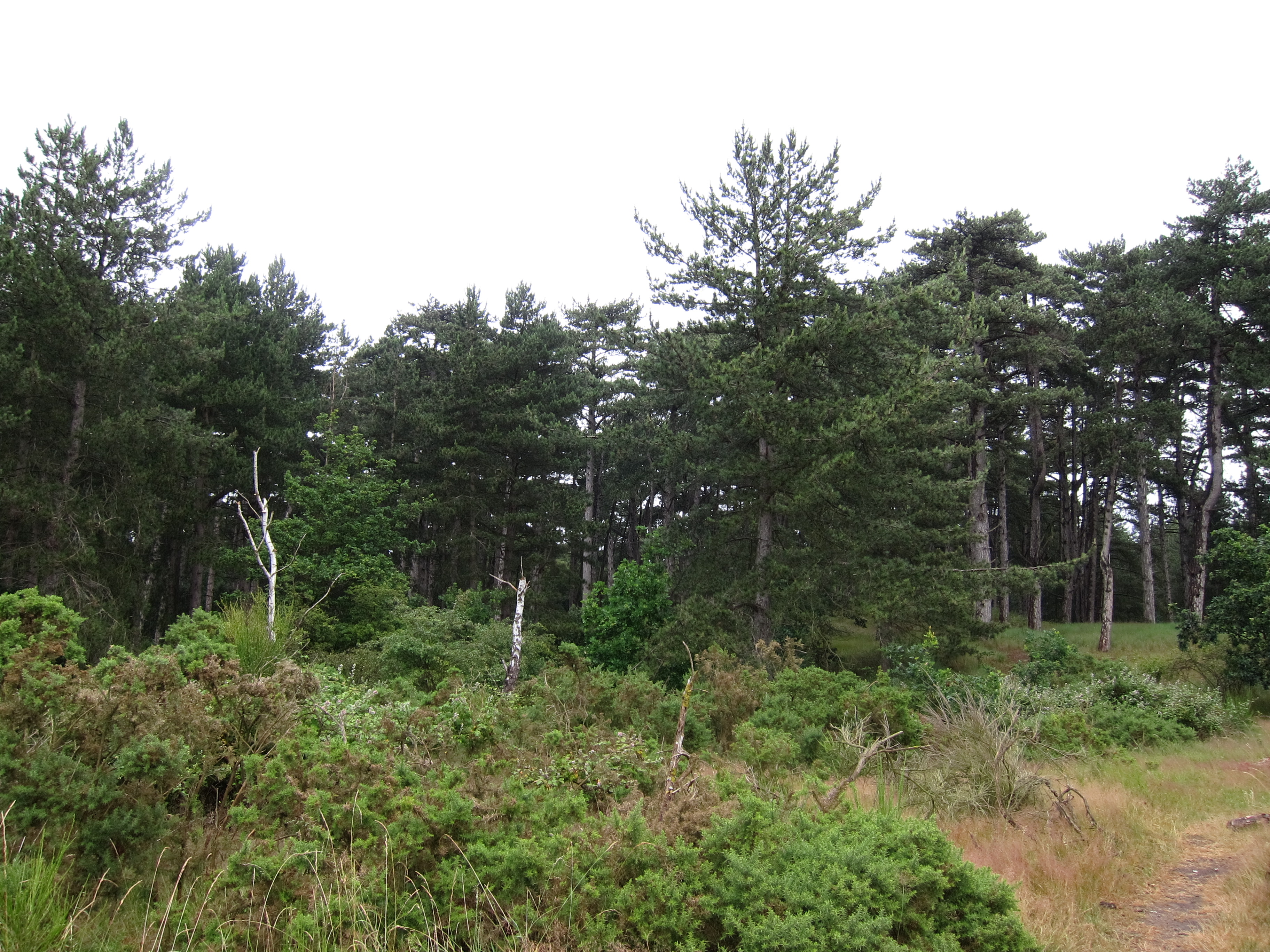
The Norfolk Coast path here runs though the Holkham estate, one of the biggest private estates in the country. Around 150 years ago, pine forests were planted by the estate as sea defences, and the path meanders through the woods, with the sea some quarter mile further out beyond the dunes. IMG_7101The weather improved, and, as I had predicted, at ten to eleven the sun broke through and the sky became blue and clear, although there was still a brisk wind. Once through Holkham woods, the path winds inland to a small village called Burnham Overy Staithe. Staithe is a northern or eastern word for a landing stage, and many of the small villages have them. Burnham Overy’s claim to fame is as the place where Lord Nelson first learnt to row and sail, before joining the Royal Navy as a Midshipman, aged twelve.

We walked on towards Brancaster Staithe. The countryside changed completely again – a raised ridge with marsh all around. IMG_7123There was another great feast of seabirds. I am practically becoming a twitcher! I have seen so many egrets now that I am becoming quite blasé about them. There were also lots of oyster catchers and something else that we could not identify for certain. A similar build to a swan, but fawn in colour. We though it might be a grebe (or rather several as we saw more than one) but we could not be certain  as we were too far away to see if they had crests.

All the while we walked along the ridge we could hear the wind rustling the miles of Norfolk reed beds, used for thatching since ancient times.IMG_7133IMG_7136

In Roman times, Brancaster was on the sea front, and an important fort on the Saxon Shore, the line of defences built, according to a common (although disputed) theory, to keep the Saxons from invading Britain. The sea is now a good mile further out.

About a mile out of Brancaster Staithe we were met by Bridget and Rita, who had found a good pub where we returned for lunch. Chris and I left at around 3.30 and carried on through to the main village, along a raised boardwalk through the reed beds.   We then continued along the road for a bit -the Norfolk coast path goes inland here, but we kept a bit closer to the sea, although it is far out beyond the salt marsh at this point. The sky looked very ominous, but, fortunately, it did not rain again.IMG_7168

I was beginning to tire – my left knee has been a bit temperamental today, following walking on shingle yesterday – not helped by stepping into a hole and jarring it. The salt-marsh and reeds receded and we back down by the beach, walking over sand dunes and rough marram grass. Fairly hard going, but lots of it has been boarded, so not too much of a struggle. Just after Holme-next-the sea, we met Bridget who had parked at Hunstanton and walked to meet us – another half hour along the dunes, and then the welcome site of Bridget’s car in the car park at the edge of the town. I am going to confess to a little cheating here as I begged a lift for the last mile to my B and B. I have now completed the whole Norfolk Coast path – 45 miles from Hunstanton to Cromer, taking 2.25 days. Today’s total was 31.4 km – 19.6 miles.

Day 48 – Sheringham to Wells-next-the-sea 28th June 2014

Just got into bed feeling completely exhausted. Last night, I hardly slept at all, behaving elected to stay at the Youth Hostel in Sheringham with Chris and Rita who walked with IMG_7023me today.

Unfortunately, I was in a shared dorm with two perfectly lovely women, who unhappily both snored like drunken sailors.   Now generally, one person snoring is just about bearable if it not too loud but both of them were appalling in both frequency and volume. I was reminded of the Ancient Mariner – they cracked and growled and roars and howled all night without ceasing, First in counterpoint, then in harmony, and finally in some devilish syncopation that kept me awake all night. Even the chickens at five am couldn’t bother me as I was ready wide awake.

Other than the noise the YH was good – excellent meal last night, though breakfast was indifferent.

Rita, Chris and I set out around 8.45 along the front at Sheringham. The forecast had been for torrential rain at 9am, but it did not materialise. We walked along for a half mile or so. Then, after going a little too far, and having to turn back, climbed up onto the low cliffs at the golf course.

The loveliest part of the morning was being surrounded by sky larks. I have never seen so many – not just in the air but on the ground too, and seemingly, unafraid of humans.   It really is the sound of a British summer. We walIMG_7044ked for about four miles on the cliff path. As well as the sky larks, we saw plenty of butterflies and also seven spotted burnet moths.
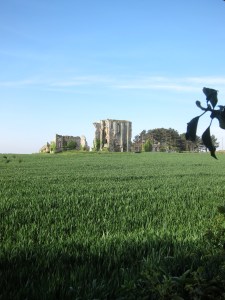
Our favourite sight of the day was a group of “fishermen.”  Well, their fishing rods were propped up, working away, but the chaps themselves were lolling on a large, inflatable sofa, with a cooler full of beer.  We thought they were probably watching the match on their phones at the same time.  No doubt they will return to their wives with stories of all the fish that got away.IMG_7061

Eventually we came down to the shingly beach at Weybourne, then turned inland to Salthouse where we stopped for a coffee. Rita left us there and Chris and I continued to Cley-next-the-sea (apparently pronounced cleye to rhyme with eye.) A number of these towns named “next-the-sea” really need to be renamed “used-to-be-next-the-sea-in-the-early-middle-ages,” often being a mile or so inland.

As we walked towards Cley we were delighted by the sight of a very elderly man, he must have been 90 plus, walking towards the sea with a collar and tie and tweed jacket and cap, long staff in his hand. We decided he had walked to the sea every day of his life since his was a nipper. He was very gentlemanly, and touched his cap to us as we passed.

Going through Cley, the path runs inland along the main road to cross a river.   Carelessly, Chris and I were so carried away by the delights of home-made Norfolk ice cream (I chose Norfolk Apple Crumble flavour – mmm!) that we missed the turning back towards the shore and took an accidental 2.5 mile detour, only discovered when Chris wondered why the sea was behind us instead of to the right. Grrr.

The Norfolk coast path is uneventful. It is hard going on the shingle areas, and the beaches today were all shingle, not like the beautiful sounds further east.  There are numerous churches along the way, all unfeasibly large, remnants no doubt of the days when East Anglia we the most prosperous, and populous area of the country after London.

We walked steadily though Blakeney, Morton and Stiffkey – no idea how that is pronounced, although we have heard that it is Stukey. We did come up with some interesting variants.  Well, I say we walked steadily. But the signage is poor and we often had to double back to find the track as it meanders through the wetlands. Despite predictions of violent storms and heavy rain, we encountered no more than a few drops. About a mile out of Wells, we met Sally and Trevor and, with the addition of Bridget, who will walk tomorrow, adjourned to the Albatross, a splendid floating pub in a converted Dutch Barge.

I am unusually tired tonight, both as a result of last night’s sleeplessness, and the detour that gave us an extra couple of miles, to make just over 20 rather than the planned 17.5. Also, I have been quite poorly for the last few weeks, and this is my first real outing. I hope I will be able to cover the distances planned.

Day 47 – Keswick to Sheringham 5th May 2014

Today was an excellent finish to the weekend. My original plan was to go as far as Cromer, but on consultation over game pie in the pub, we decided that that plan lacked ambition, so settled on Sheringham as the day’s destination.

It was an absolutely glorious morning, and we workedIMG_6152 up an appetite for breakfast by taking a brief detour to the ruined Cluniac Priory at Bacton. The sky was vivid blue, enhancing the white stone of the ruined Romanesque building. We couldn’t get very close, as it is on private land, but the old gatehouse was accessible. The local architecture relies very heavily on walling of flint cobbles, and the gatehouse and surrounding cottages were largely constructed of this, with stone or brick quoins.

We set out along the beach around 9.45 am. The tide had not fully retreated, and as the coast is very uneven in the amount of erosion that has taken place, there were points when we were dashing across the sea wall between waves – not always successfully. I got a good shower at one point.Early bath

What I had taken yesterday to be many different types of stone on the beach turned out to be almost all flint, in various states of erosion. I did not know that flint could come in so many different shapes and shades, having assumed it would all be shades of black and white. Tom was hoping to find some amber, which apparently is not uncommon on this coast, but had no luck. The cliffs were climbing in height to a couple of hundred feet, mainly of very soft sand and clay with frequent landslips.

There were various types of groins, one sort being built in a type of zig-zag, known in East Anglia, Tom informs me as “crinkle-crankle”.   What a marvellous new word – I shall be looking out for opportunities to use it in conversation.IMG_6170

There were lots of people and dogs about. I have noticed that everyone in Norfolk seems to have at least two dogs – the one dog family was rare.

We saw some turnstones, a couple of oyster catchers and a bar-tailed godwit, but not many birds overall, not even many seagulls.

The sun was out and the wind remained light, and from the west so it was very pleasant. At one point we had to scramble round some very soft clay-ey rocks, much to the detriment of boots and trousers, but the walk was not demanding. A sandwich of the famous Cromer crabs was had in Overstrand, just to theIMG_6240 east of Cromer, accompanied by excellent Norfolk Apple juice, then a brief stroll took us to the prom at Cromer. Cromer is a very traditional sea-side town – early nineteenth century housing on the cliff tops and a pier from the early twentieth century. There were plenty of traditional sea-side venues and just enough wind to make sure of red faces.

We passed the Beeston Bump, at 207 feet the highest point on the Norfolk coast, just before arriving in Sheringham in time for the 17.42 train to Norwich. A delightful 14.75 miles, which has taken me well over 800 in total.

Day 46 – Winterton to Keswick 4th May 2014

Today I saw something I have never seen before in Britain – seals en masse. I have seen the odd one off-shore in North Wales, but never in groups (pods? colonies?). I had heard talk about seals north of Winterton in the pub last night, and Sally had mentioned that it was an area noted for wild life, but I had given the matter no further thought, until, about an hour north of Winterton I saw some people sitting on rocks doing nothing. ThiIMG_6100s is unusual: unless the sun is out and they are sunbathing, people tend to walk on beaches, or, if they are sitting, they are fishing. As I came closer, I saw what I thought was a black labrador playing in the waves, and assumed that the sitting people were waiting for their pet, then, a bit closer I realised it was a seal playing in the shallows.

A hundred yards further on, what I had taken to be rocks were, in fact dozens, if not over a hundred seals of all shapes, sizes and colours, basking on the sands. The vast majority were having a Sunday morning lie in, but the odd few sat up, scratched and waddled into the waves. It was a magnificent sight and repeated a few miles further on where a different, slightly more lively colony were also lying on the beach, completely impervious to the sight of me walking past. IMG_6119

The was spent entirely walking along the beach, initially, it was firm enough but there were a few places where it was hard going over soft sand. I had an unexpected wetting when I stopped to throw a stick for a friendly labrador and didn’t spot the wave coming up behind me.

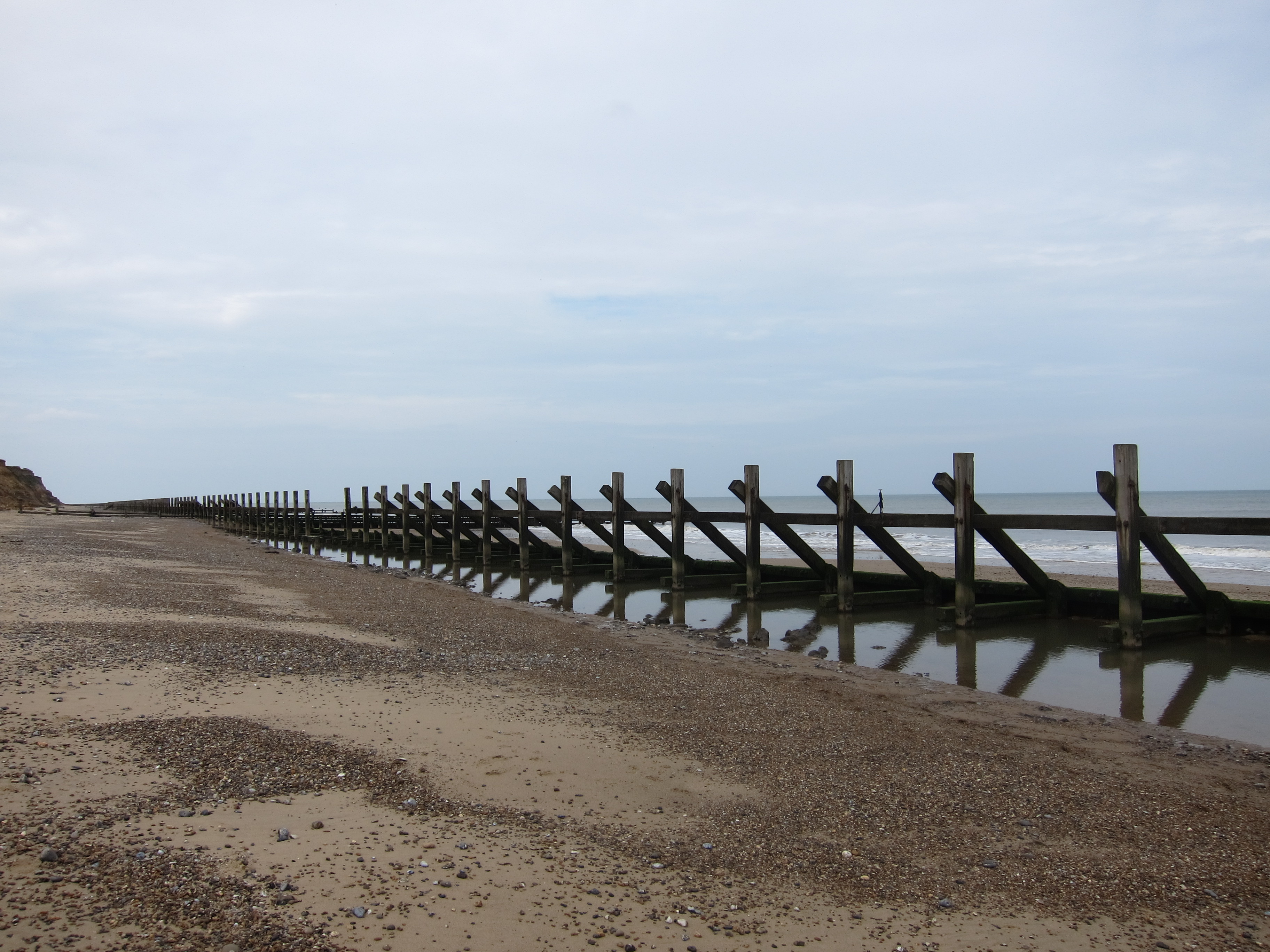
The cliffs gradually changed from white sand dunes to golden cliffs by the time I reached Hapisburgh. (This is apparently pronounced “Hazeborough”).  The light house is a lot closer to the sea than it used to be!IMG_6134 The wave damage to the caravan park there has been huge, the cliff is covered with dangling pipes, wires and bits of fencing, with lumps of concrete all over the beach, all suggesting a fairly recent fall. After Hapisburgh the sea defences are formed of a rather ugly line of fencing that effectively cuts the sea off from the foreshore. I hurried along this bit, my feet starting to ache with the effort of walking on sand. IMG_6144

I climbed up to the cliff at Walcott Gap and walked through a timeless stretch of countryside, a ploughed and harrowed field with a church behind and an elderly man digging and delving in his allotment.

Keswick, where I am staying, has rather a good ice cream parlour where I treated myself to some vanilla and honeycomb, but it was plagued with midges this afternoon, as the weather has turned rather muggy. I am awaiting the arrival of Tom who is joining me for the walk to Cromer tomorrow.

22km today, around 13,75 miles which was easy after yesterday’s 20.25 miles. Distance is influenced by the availability of accommodation!

Day 45 – Lowestoft to Winterton-on-Sea 3rd May 2014

It’s definitely been a game of two halves today, with this afternoon absolutely blissful, and this morning rather less so.

I am finding that where there aren’t local train services linking towns on the coast (as there were in the south east) it is complicated and expensive to use the car, as I have to get a bus (few and far between) or a taxi (ruinously expensive). I therefore decided to try walking with enough stuff in my pack for a long weekend. Of course, I have walked with enough gear for a week in Wales and on the West Highland Way, but I was a good deal younger then, though maybe not fitter. Anyway, I decided to give it a try this weekend, so with my shiny new backpack (see equipment section if you are interested in the minutiae of packs and packing) I leapt on the train at Liverpool Street, to be decanted at Lowestoft at around 7.45 last night. My B&B was only five minutes’ walk (see review).

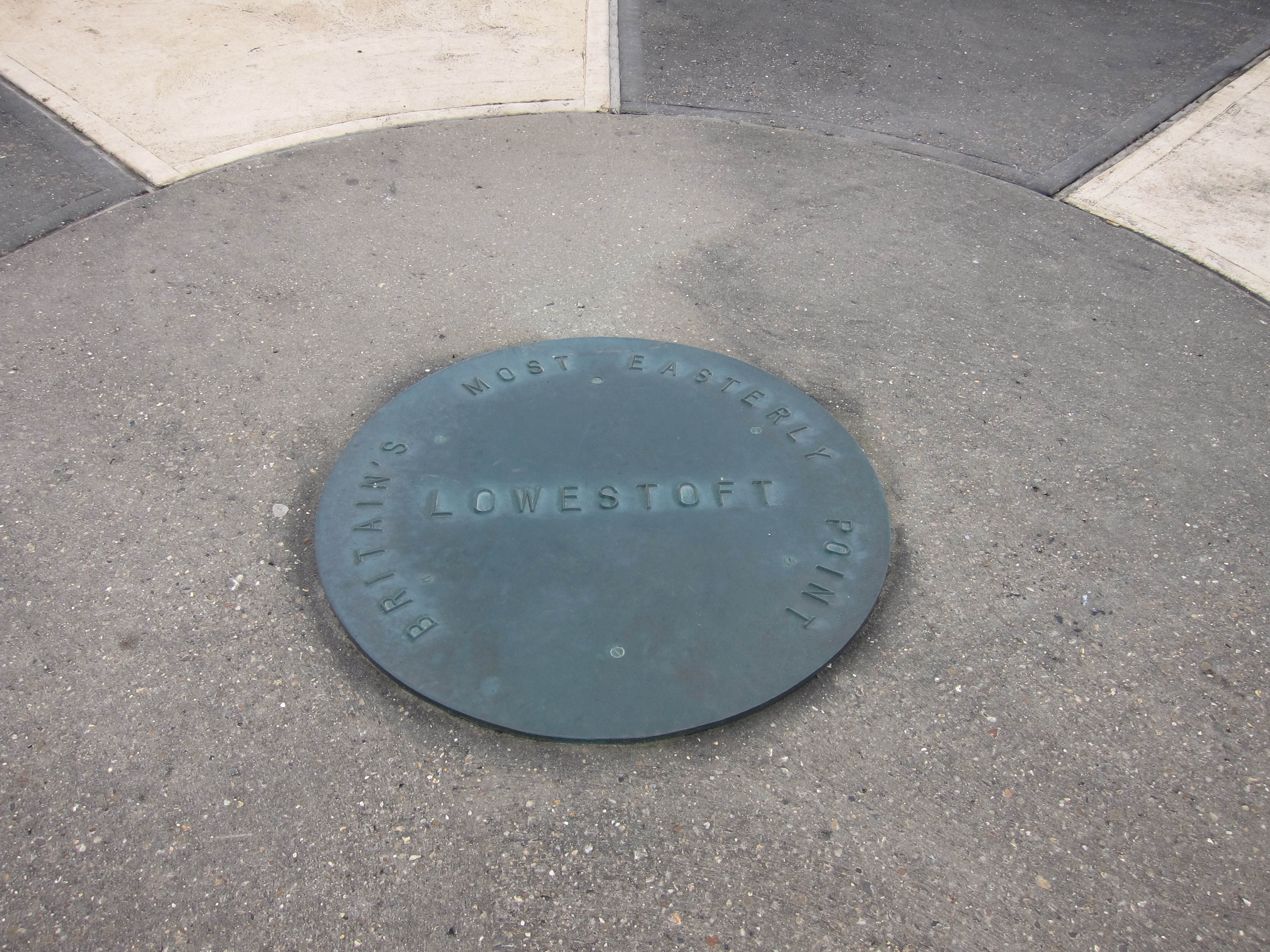
I set out at 8.30 sharp, and retraced about a hundred yards that I had done last time. Lowestoft is not beguiling, and the wind was, if not howling, at least moaning. The first few miles were along the sea wall. In due course, I came to Lowestoft Ness, which makes this a red letter day, as that is the most easterly point in Britain. I have done the most south easterly (South Foreland) and should bag the most south westerly later in the summer.IMG_6006

The sky loured, but it didn’t actually rain. At the beginning, walking along the sea wall was fine, but it began to get narrower and more slippery as it went on, with warnings about using the path at one’s own risk, and a few places where the waves came right up and crashed over the path in front of me. The sea wall and cliff paths have been badly damaged by the last couple of winters’ storms and I eventually had to go inland to make a long and very frustrating detour through a caravan site. Not because it was further, but because all of the paths and roads seem to go round on circles with no exit. Eventually, I emerged onto a golf course at Gorleston. I could see Gorleston point and Great Yarmouth inland of it.

Great Yarmouth is no more appealing than Lowestoft. Both towns seem very poor and there was an air of deprivation about the whole place. I walked up the west bank of the Yare amidst light industry and deserted coastal type buildings, to cross the river some two miles inland. Were I a purist, I would have walked right down to Gorleston Point on the east bank of the Yare, but I’m not, so I didn’t.

Today was market day and the town square in was very full. I walked through it stopping in Boots to replace my toothbrush. In the interests of packing light I had a tiny travel one with me, but it more or less disintegrated and left me with a mouth full of bristles this morning, which was quite horrible, so be warned, and do not economise on tooth brushes.

Down on the sea front again, at Scroby Sands the scenery improved over the dunes, towards Caistor, which still has the remains of its Roman fort. I saw a couple of chaps thatching a sea side shelter.  I have never seen thatching actually being done before. It looked like hard work – balancing whilst handling armfuls of reeds, about 3 – 4ft long.IMG_6041

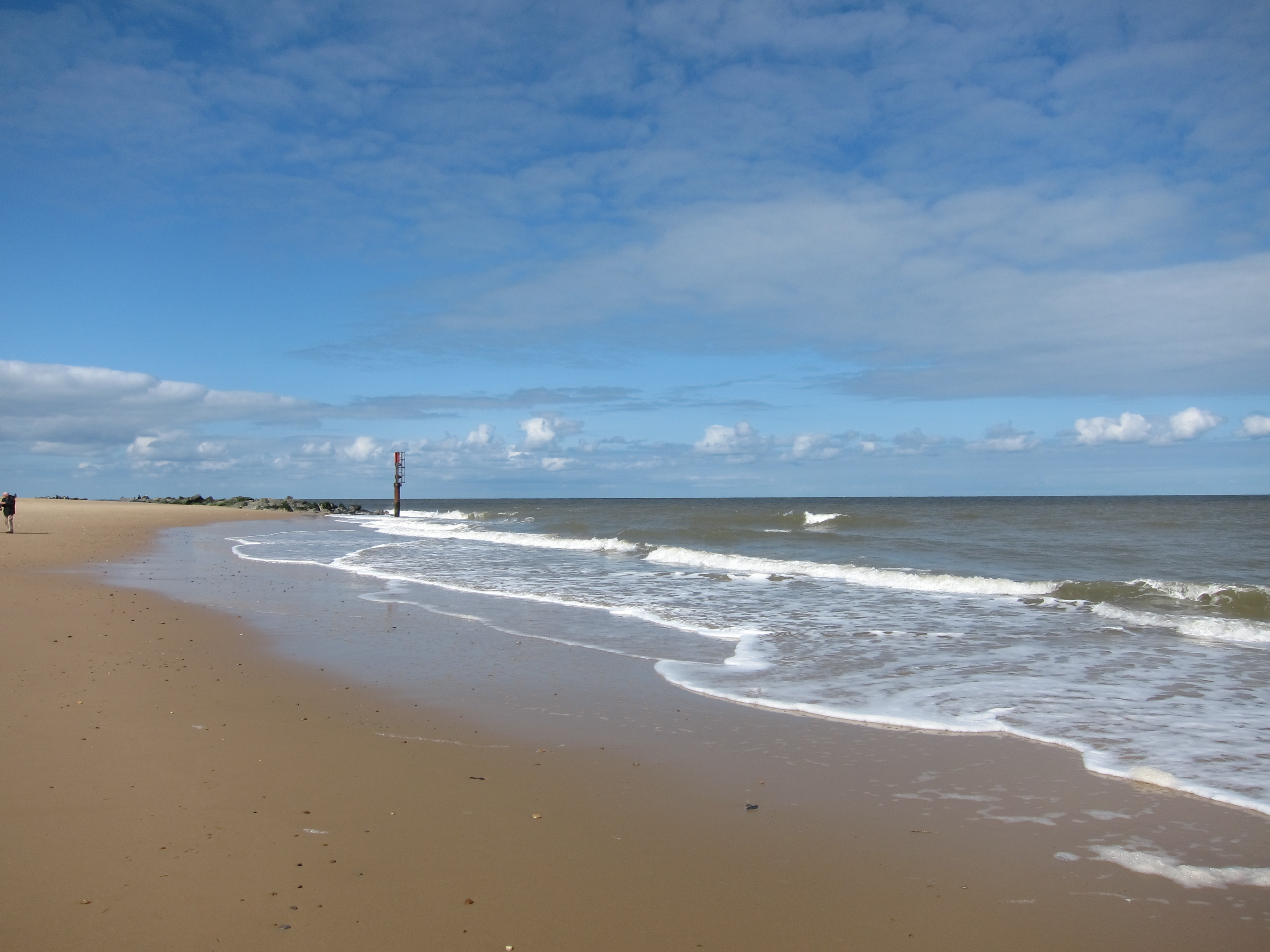
Out at sea I could see the Scroby wind farm. As I have said before, I think, I rather like off shore wind farms. Once I passed Caistor, I walked along the beach, and this is where the afternoon triumphed. The beach was superb; a long, flat stretch of firm golden sands as far as the eye could see. The sun had more or less emerged and the wind had dropped so that the sea was a vast expanse of blue with a fringe of white.IMG_6056

On this day last year I put my feet in the water for the first time, and I decided to do the same today. It was marvellously refreshing, but achingly cold. Nicer under foot than the pebbles at Chichester harbour had been.IMG_6058

I was not tempted to do more than stand in it for twenty seconds before putting the boots back on.

I walked along this magnificent stretch of coast for some eight miles to Winterton-on-Sea, a quiet fishing village with a very pleasant atmosphere (and a lot of adders!) I am now sitting sipping a cuppa in the Fisherman’s IMG_6078Return (see review) having covered 20.25 miles.
Day 44 – Southwold to Lowestoft 21st April 2014

I was on the horns of a dilemma today. My original idea, when planning the weekend, was to go from Southwold to Great Yarmouth, but, looking at the maps in more detail, that seemed too far. Lowestoft, on the other hand didn’t seem far enough. There was no logical place in between to stop between the two, so I decided on discretion- helped by the fact that there is a bus between Lowestoft and Southwold which would save me a huge taxi fare. It was the right decision as my camera ran out of space for more photos just as I walked into Lowestoft.IMG_5922

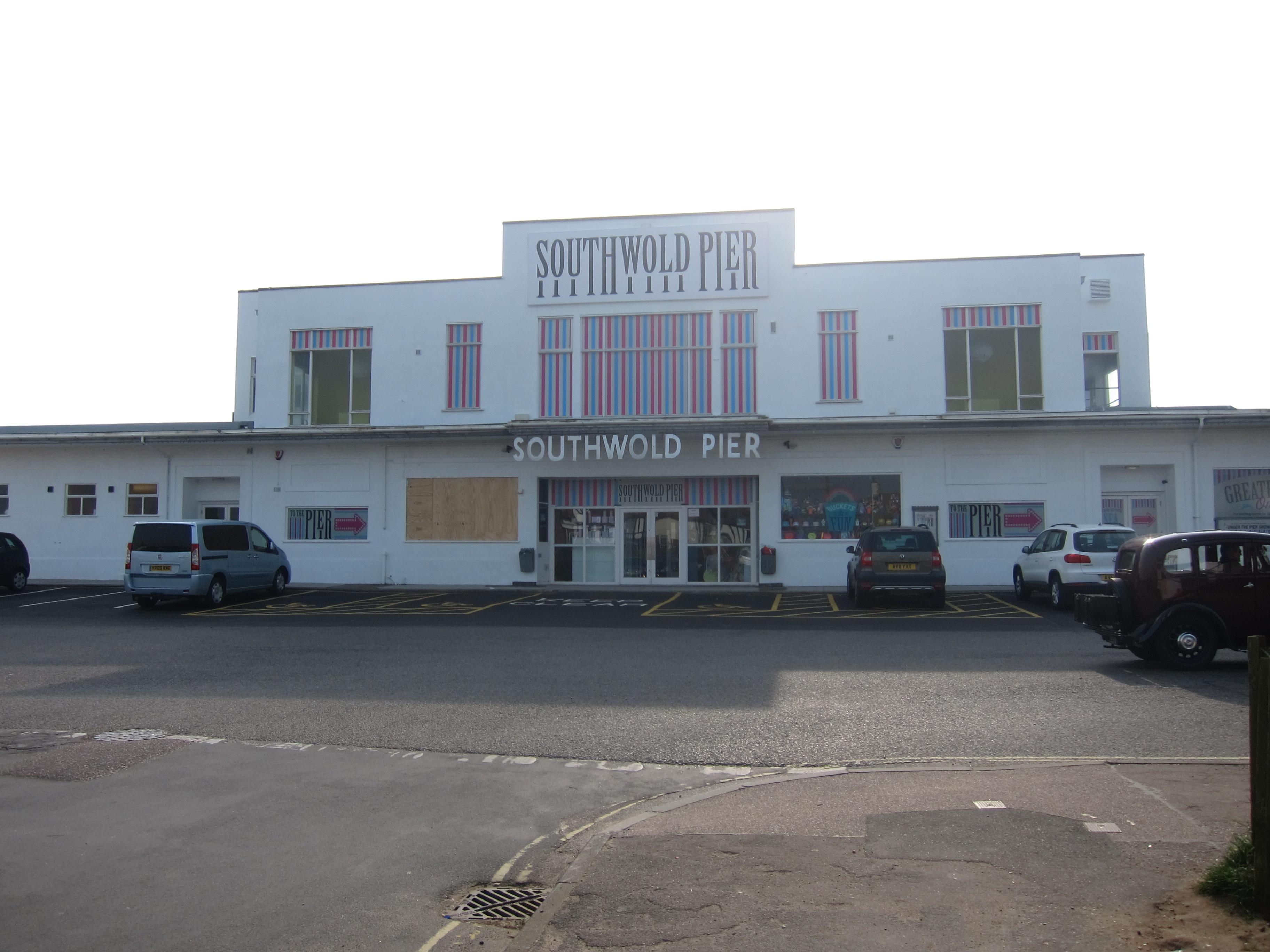
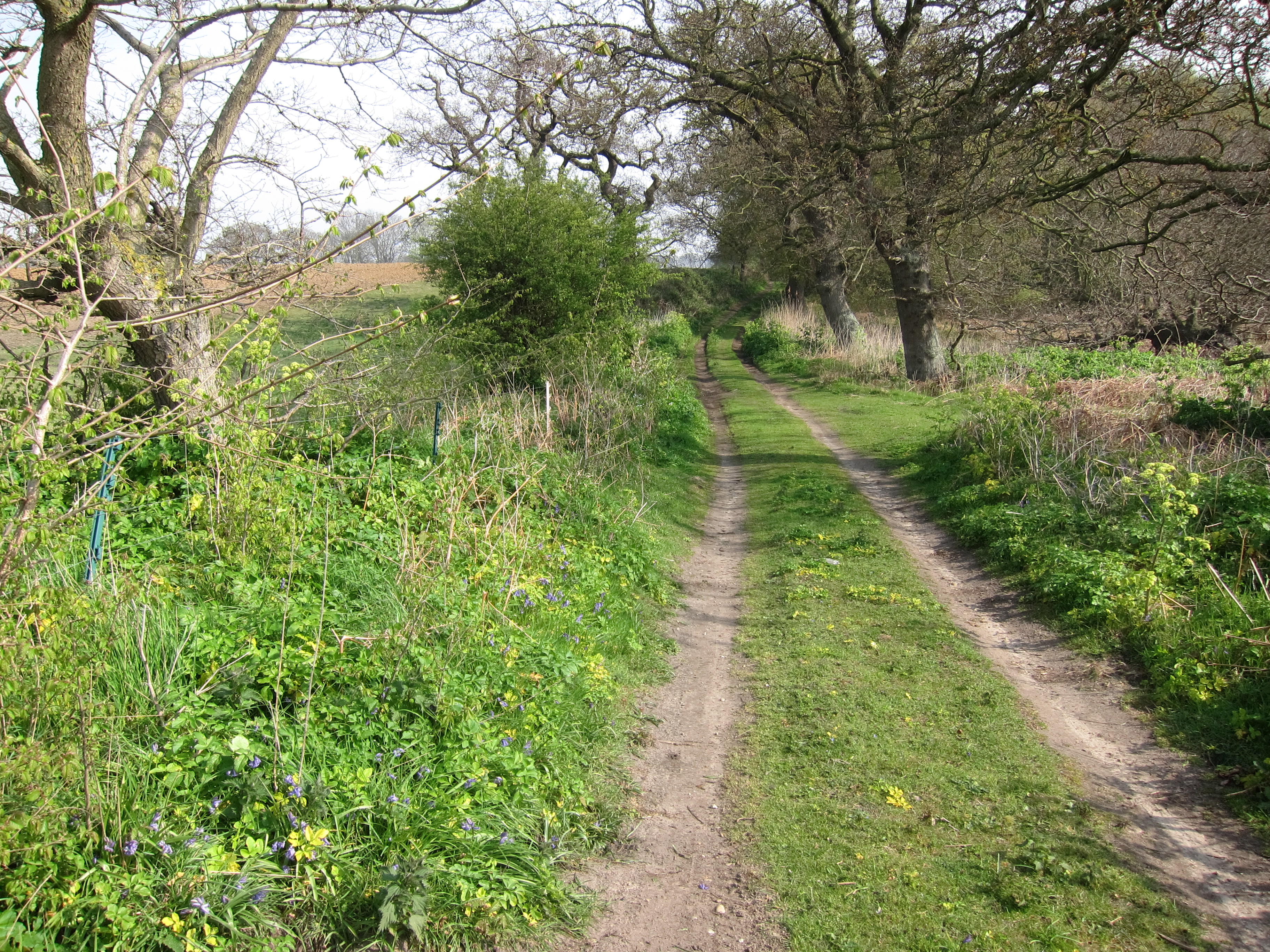
The day started very well – I parked for free (!) near Southwold pier and walked along the front for a few hundred yards. The pier is a real Art Deco gem. The sun was shining, and the wind much less fierce than yesterday. Owing to the massive storm surge last December, much of the coast is inaccessible. I turned inland on the Suffolk Heath and Coast Path. It was a delightful morning – the path was mainly along a byway, with banks of windflowers on either side – true bluebells, primroses, ragged robin and sweet woodruff. I like Suffolk, it feels more rural than Essex, and the countryside is gently rolling, rather than completely flat.IMG_5937

After some 5 or 6 miles inland, the path turned directly east to the coast at Kessingland. I stopped for elevenses (see review), then followed the path directly onto the beach. I was a bit apprehensive that it would be miles of shingle, but, although there were a few sand dunes to negotiate initially, it was possible to walk on firm sand. The view was different from any coast I have walked on before. A vast expanse of beach – the tide was out, a completely flat, rather than sloping IMG_5969foreshore, and low sandstone cliffs. Oddly, the landscape reminded me of thIMG_5967e high plains in South America – an impression enhanced by the presence of a lone rider, walking, then cantering along on a grey horse. IMG_5966The only thing to spoil the picture was the rider’s high-vis jacket – not sure the ‘ealth ‘n’ filth have got to Bolivia.

I could see a marvellous kite from a good mile distance – it was a giant squid, with beautiful waving tentacles, dancing on the stiff breeze.

Advancing towards Lowestoft, I had to look lively as the tide was coming in, forcing me to walk on the shingle, dodging around fishermen. These chaps have all the gear -several rods on stands, windbreaks and one even had a girlfriend, clearly bored out of her mind as she huddled on a beer cooler in layers of down -presumably she is still in the courtship stage of pretending to love his hobbies.

The sun was out, and the nippy wind was not enough to put off the determined holiday-makers out with bucket and spade. Those who know me well, will be aware that children are not really my thing, but it is great to see so many of them building sand castles, digging to Australia, scooting along the prom, flying kites with dad and playing ball games. I almost smiled at them, but was returned to sanity when I passed a clutch of them at a chip shop all chanting “we want food” at the tops of their voices.

I was very fortunate only to have to a few minutes for a bus, and got back to Southwold just as fat spots of rain began to fall. I did a very light weight 13 miles, but they were all enjoyable.

Day 43 – Aldeburgh to Southwold 20th April 2014

IMG_5795I think I have seen more varied scenery today, than any other day. The distance was modest compared with yesterday, but that has taken me through pretty villages, past bleak nuclear power station, over heath, woodland, farmland, a ruined friary and marsh.

I began around 9.15 in Aldeburgh, interestingly spelt Aldbro on the milestone in the high street (London 94, Wickham market 12). I took lots of pictures of the high street, and particularly the Moot Hall, built in 16th century for the Town Hall, and still used for that purpose today. Since it was only 9.30 on Easter Day with a biting cold wind, I had the place pretty much to myself except for the fresh fish stalls and the super-keen runners.

The beach is flat and shingly, but fortunately the land side has enough build-up of soil and grass to make it walkable. It is not exciting scenery so I made fast time to Thorpeness, where I stopped for coffee and a Hot Cross bun in a cafe overlooking the village pond. Most of the other patrons were Londoners and I heard a good deal about “my mother’s friend’s art gallery in Fulham” and “the affordable art fair in Battersea”, now becoming “unaffordable”. This was interspersed with “Olivia, don’t do that” and “Sebastian is doing so well with his violin.” I don’t think my muddy boots, rumpled hair and generally wind-swept look were quite what they were used to and I felt no compulsion to hang around.

Leaving Thorpeness, there is no defined path along the beach, and I could not face more shingle, so I followed the Suffolk Coast and Heath path inland for a bit, along an old byway over heathland, covered in gorse. This took me into the largest pig farm I have ever seen. Hundreds of sides of bacon on the hoof, each with its own little Nissan hut shelter. Being spring, there was plenty of energetic courting going on.IMG_5843

Eventually, the path turned back towards the shore, and after passing through some light woodland on the cliff top, below an old hall, it dropped down to a very bleak grassy, sandy stretch running in front of huge Sizewell Power station. It looked quite as sinister as Bradwell, back in Essex, with a massive dark grey concrete monolith in the middle, flanked by slightly less sinister buildings with windows, and a futuristic geodesic hemisphere. The surrounding land is, strangely, a haven for wildlife, and the next eight miles were over sites of special scientific interest and nature reserves. I can’t say I saw anything more exotic than seagulls and a few magpies today.

The path climbs away from the sea up towards Dunwich, famous for its cliff fall. First, the route goes over a vast heath with all sorts of heather and gorse, with twisting sandy paths cross-crossing it (part of the Sandilands Way). It then goes through light woodland and into what is left of the village, past the ruins of a Franciscan friary, founded by Richard Fitzjohn and his wife Alice, in the early thirteenth century, then moved inland to its current site in 1289 by the burgesses of Dunwich but is only yards from the cliff edge now. It was dissolved in 1538.IMG_5880

I then followed the road for half a mile through the village, with some rather nice-looking pubs, before joining a wide track with wood and heath on either side. In due course this leads to Walberswick Marshes containing the biggest expanse of reeds I have ever seen – over five foot in height they spread in all directions, with the grey sea just visible from higher ground. Boardwalks have been formed, and one can meander through the reeds in all directions. I headed straight for the quay at Walberswick, where I had another great ferry trip. The boat this time was a small craft, seating about eight plus the oarsman, who was, in fact, a young woman. She was doing a roaring trade (although the fee was only 90 pence), but it wasn’t easy work, steering across a fast current on a very windy day. http://www.visitsouthwold.co.uk/articles/17728/Walberswick+FerryIMG_5889

On the north side, one can opt for the inland path or crunch over the shingle into Southwold – I went for inland. The town was heaving. I stopped for a quick drink, then got a taxi back to Aldeburgh driven by a fairly elderly Greek chap, who has lived in Lowestoft for a mIMG_5907ere three and a half years, but it hasn’t taken long for him to become a stereotypical taxi driver with tales of scroungers and benefit cheats…..

I had dinner back in Aldeburgh (see review) and am now cosy in my B&B.

Distance was 15.5 miles at an average of just under 2.6 miles per hour.