

 We had a great celebratory meal last night, at an Italian restaurant in Mumbles, and I confess I was a little heavy-headed this morning. We hoped that today might be the lucky day for finding an 11 o’clock coffee stop, but alas, no joy.
We left one car near the station at Gowerton, then came back to the pub we finished at yesterday, and turned off down the lane where, had the sea wall at Cwm Ivy still been intact, we would have emerged from the salt-flats. To begin with the walk meandered around the flats again, but then entered farmland and some pleasant wooded areas.
However, it was not long before the path joins the road at Crofty. We arrived there around 10.15, but neither pub was open. The door of one was actually open, and a lady was laying tables, but she did not feel able to serve us coffee – nothing could be done before twelve.
Somewhat disgruntled, we marched on. Before long we saw a hiker coming towards us and stopped to talk. She is doing the Wales Coastal Path, but in the opposite direction. We talked about the optimum number of days to do on a trip. I said that in some ways, I’d like to do a really long chunk of two or three months, but that in fact, the longest stretch I have done was two weeks, by which time I was thoroughly fed up. Her advice was that, once you push through the two-week mark, walking becomes your life, and you sink into it completely. Not sure – one to think about if I have an extended period of free time – not likely in the immediate future.
The road was quiet to begin with, but became busier. In parts, you can walk to the side on the old railway track, now a cycle-path, which used to serve a branch line from Gowerton to Penclawdd, initially installed to move coal from the mines in the Morlais valley. It is hard to believe there were once mines in the Gower – the Welsh Development Agency has done a fantastic job of removing all signs of this once pervasive industry. Before the railway, there was a canal, which brought coal from inland to the dock, for transport to sea-going vessels. There is the merest ghost now of the dock to be seen at low-tide.
Some effort has been made to make the route pretty with wildflowers, and it was good to see across the estuary, but after yesterday’s gorgeousness, today was bound to be a bit tame. Nevertheless, the weather was pleasant, and having my brother-in-law for company made it a silver day.
12 miles.
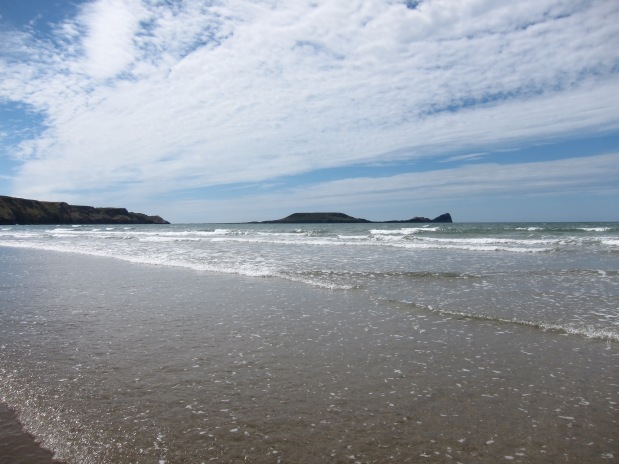
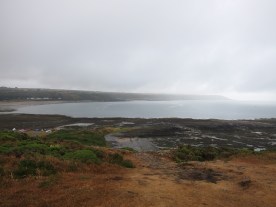
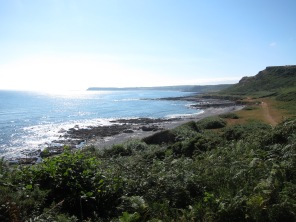
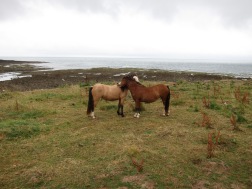 The tide was out, showing how the cliffs have developed over millennia, rock thrusting up from the earth’s core, and being worn away by the constant pressure of the waves. There are no trees on this stretch of path, nothing but gorse. Although we have had rain the last couple of days, the grass is yellow and worn.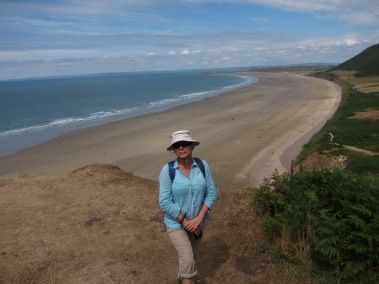
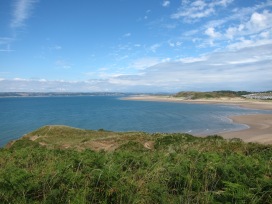 We then curved round and down into some sand dunes, and the path meandered down to the beach at Llanmadoc The beach went for miles, extending into an area called Whiteford Sands along a spit, and, for me, was quite as impressive as Rhossili. We kept thinking we must have reached the end, but the beach curved on and on for nearly four miles. At the northern-most tip, it swung back on itself and the path went inland. To our left was a vast expanse of wetlands and marsh. To our right, a strip of woodland, Whitford Barrows, only a few hundred yards wide, but completely different scenery from the beach on the other side.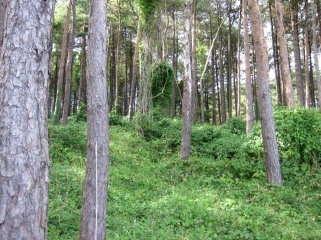
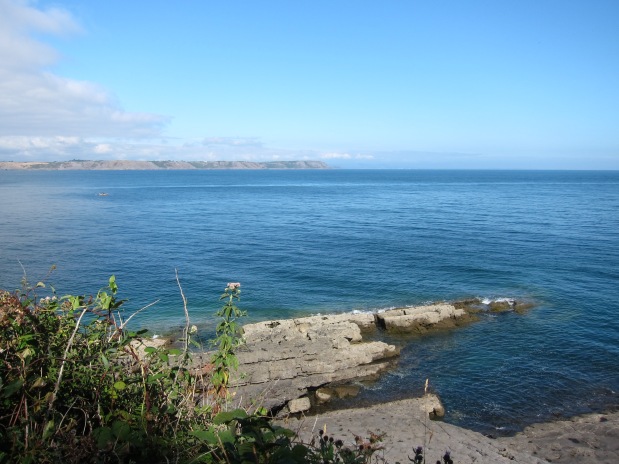
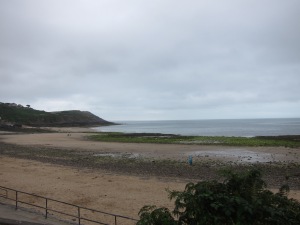 e down into Gower, and left one car at Port Eynon, before coming back to Caswell Bay. We dropped down on to Pwll du beach – being very critical of the rather ugly 1960s block of flats that over shadows it. Walking to the end of the beach, it was not clear where the path went – either over a heap of rocks at the end or else up onto the road in front of the block.
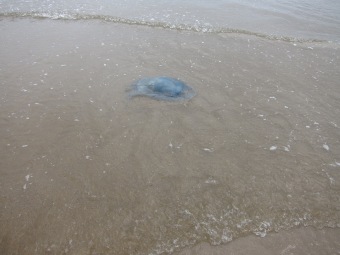 family, who was eager to tell us about the giant blue jelly-fish he had found. It was the largest one he had ever seen – it was even the largest one his dad had ever seen! And when we came onto Oxwich beach, we could agree that the jelly-fish are monsters!


 Melita's Coast of Britain Walk